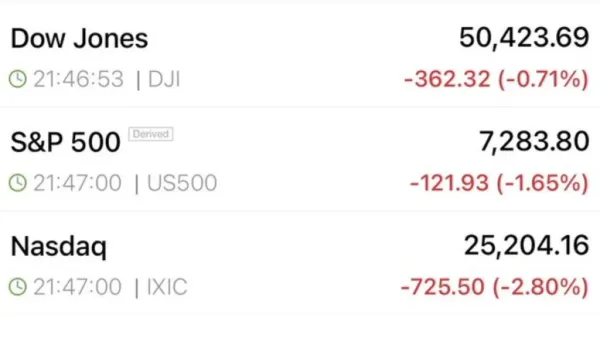
The mood on Wall Street changed dramatically within hours.
Earlier in the session, investors were pushing stocks higher and extending the market’s recent rally. By afternoon, that optimism had vanished. The S&P 500 dropped more than 1%, the Nasdaq erased its gains, and a comeback attempt in semiconductor stocks lost momentum.
At the same time, commodities were hit with heavy selling pressure. Crude oil plunged more than 4%, while gold and silver also moved lower, creating a rare situation where both traditional safe havens and growth assets came under pressure together.
Crude oil leads commodity selloff
The most aggressive move came from the energy market.
Crude oil extended losses beyond 4%, marking one of its sharpest declines in recent weeks. Such a move typically reflects changing expectations around global demand, economic growth, geopolitical risks, or a combination of all three.
The decline spread beyond oil.
Gold and silver also slipped, suggesting investors were reducing exposure across the commodity complex rather than simply rotating from one asset class to another.
When oil, precious metals, and equities fall simultaneously, it often signals a broader shift in market positioning rather than an isolated sector event.
Technology shares were initially expected to support the market after a strong start to trading.
Instead, momentum faded.
Semiconductor stocks, which have been among the biggest winners of the AI boom, failed to sustain their rebound. As buyers stepped back, the Nasdaq lost its footing and surrendered earlier gains.
The reversal is notable because chipmakers have become one of the market’s most important leadership groups. When semiconductors weaken, broader technology indexes often struggle to maintain upward momentum.
For investors, the failed recovery attempt may raise questions about whether parts of the technology sector are entering a period of consolidation after months of strong gains.
A market suddenly searching for direction
The speed of the reversal is what stands out most.
Only hours earlier, traders were celebrating gains in major indexes. By mid-session, stocks, commodities, and several risk-sensitive assets were all moving lower. That kind of shift often reflects a market that is becoming more sensitive to incoming economic data, Federal Reserve expectations, and valuation concerns.
The next trading sessions will reveal whether this was simply a sharp bout of profit-taking or the first sign that investors are becoming less comfortable with the powerful rally that has driven markets higher throughout much of the year. For now, one message is clear: the buyers who controlled the opening bell no longer control the close.
Contact to : xlf550402@gmail.com
Copyright © boyuanhulian 2020 - 2023. All Right Reserved.