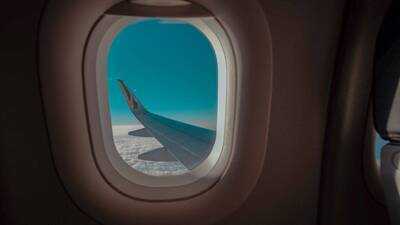
Look out from any airline seat and the shape appears entirely ordinary. Aircraft windows are rarely square and rarely have sharp corners. Instead, they follow a rounded outline that has become so familiar most passengers never question it. Yet this detail is not a styling choice. The shape reflects a problem that emerged during the early years of commercial jet travel, when aircraft began flying higher, and cabins required greater pressurisation. What engineers learned from that period reshaped aircraft design and helped establish one of the most recognisable features of modern airliners. Behind those curved edges lies a story of engineering challenges, unexpected failures and decades of refinement aimed at making high-altitude travel safer and more reliable for millions of passengers worldwide.
Why aeroplane windows need rounded corners
Every commercial aircraft operates between two very different environments. Inside the cabin, air pressure is maintained at levels that allow passengers and crew to travel comfortably. Outside, conditions at cruising altitude are colder and far less dense.
That difference creates continuous stress on the aircraft's structure. The fuselage is designed to contain the pressurised cabin, but every opening cut into its surface interrupts the flow of forces moving through the metal skin.
The challenge becomes particularly important around windows because there is no structural metal occupying that space. The surrounding material must absorb the loads that would otherwise pass through a solid section of the fuselage. When openings contain sharp corners, stresses tend to concentrate at those points rather than spread evenly across the structure. Over thousands of flights, even small concentrations of stress can become significant.
The De Havilland Comet disaster that changed aeroplane window design
The lesson was learned during the pioneering years of commercial jet aviation. In 1952, the British-built De Havilland Comet entered service as the world's first commercial jet airliner. It represented a major technological leap, offering higher speeds and greater operating altitudes than previous passenger aircraft. The aircraft also featured large square windows with corners cut at right angles.
Within a relatively short period, several Comet aircraft were involved in serious accidents. Investigations eventually revealed that repeated cycles of pressurisation and depressurisation had produced metal fatigue around the window openings.
cracks developed near the corners where stresses were concentrated. As these cracks expanded, parts of the fuselage weakened until structural failure occurred during flight. The findings became one of the most influential discoveries in aviation engineering and forced manufacturers to reconsider how openings were incorporated into pressurised aircraft structures.
Why rounded aeroplane windows are safer than square ones
The solution was straightforward in appearance but highly effective in practice. Rounded edges allow forces to move around a window more smoothly. Instead of collecting at a sharp corner, stress is distributed across a wider area of metal. This reduces the likelihood of fatigue damage and makes crack formation far less likely.
As reported by the New York Post, which revisited the history behind aircraft window design, noting that the industry's shift away from square windows followed the structural failures experienced during the early jet age. The article highlighted how engineers recognised that angular window shapes encouraged stress concentrations, while rounded designs helped prevent the development of dangerous cracks.
The principle extends beyond aviation. Engineers routinely avoid sharp internal corners in structures that experience repeated loading because curved shapes generally handle stress more efficiently.
How modern aircraft still benefit from rounded window design
Aircraft construction has advanced enormously since the 1950s. Modern airliners benefit from sophisticated computer modelling, improved materials and extensive structural testing before entering service. The rounded window, however, remains. Its continued presence reflects a lesson that has never lost relevance. Commercial aircraft may undergo tens of thousands of pressurisation cycles throughout their service lives, and designers still seek ways to minimise fatigue wherever possible.
Future cabin concepts occasionally imagine replacing traditional windows with screens or virtual displays. Whether such ideas become common remains uncertain. For now, the familiar rounded aircraft window serves as a visible reminder of a turning point in aviation history, when engineers discovered that something as simple as the shape of a corner could have profound consequences for aircraft safety.
Contact to : xlf550402@gmail.com
Copyright © boyuanhulian 2020 - 2023. All Right Reserved.