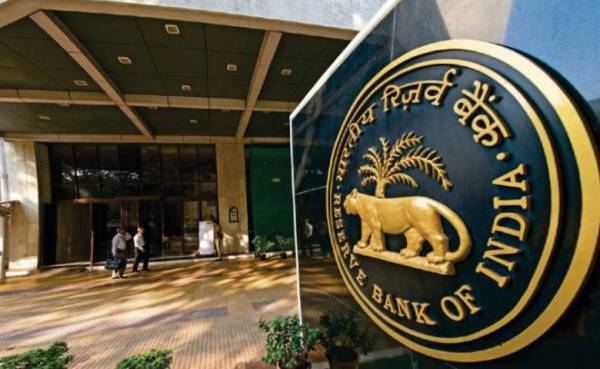
Mumbai: Rising inflation and signs of price pressures spilling over into a range of goods weighed on the RBI’s six-member Monetary Policy Committee (MPC), which unanimously voted to hike the repo rate by 25 basis points this month, according to the minutes of the panel’s meeting released Wednesday.
At the three-day meeting, where the MPC decided to raise the benchmark lending rate for the first time in nearly four years, RBI Governor Sanjay Malhotra said it was appropriate to shift the monetary stance to calibrated tightening.
“…essentially signalling that rate cuts are off the table in the near term and policy action ahead can only be a rate hike or a pause, depending on the evolving circumstances and the outlook,” he said.
The Reserve Bank of India raised the benchmark interest rate by 25 basis points to 5.50 per cent October 7 after the three-day MPC meeting. Along with the governor, the other five MPC members voted for raising the repo rate.
Malhotra noted that there are increasing signs of generalisation of inflation as 37 per cent of the commodities in the CPI basket had inflation above 4 per cent in August it was merely 20 per cent in March, the minutes said.
“The duration and extent of the rate hiking cycle would be contingent on the actual growth and inflation developments and outlook, especially that of underlying inflation, the broadening of price pressures, second round effects of the supply shock, and the impact of demand impulses,” he said.
MPC member and RBI Deputy Governor Poonam Gupta said inflation is mostly driven by external supply-side shocks, with little sign of it becoming entrenched or affecting inflation expectations.
She said that during the post-pandemic inflation-targeting period, whenever inflation has reached or breached the lower or upper tolerance limits, the RBI has taken appropriate policy action.
“This has helped retain the credibility of the framework and has kept inflation expectations aligned to the target. Thus, rather than waiting any longer, in view of rising inflation and resilient growth, I favour raising the policy repo rate by 25 bps in this policy,” said Gupta, in charge of monetary policy.
MPC member and RBI Executive Director Indranil Bhattacharyya observed that the inflation outlook merits greater attention, given supply-side pressures from crude and food prices are unlikely to relent quickly, the minutes said.
With demand holding strong and in the wake of strong growth in monetary and credit aggregates, the interplay of both supply and demand factors could ratchet up inflation pressures significantly in the period ahead, he said.
“Therefore, I feel it is better to set aside the ‘cautiousness bias’ and act in a pre-emptive manner at this juncture rather than wait and watch,” Bhattacharyya said.
The MPC consists of three members from the RBI and an equal number of external members appointed by the government.
The external members are: Nagesh Kumar (Director and Chief Executive, Institute for Studies in Industrial Development, New Delhi), Saugata Bhattacharya (Economist), and Ram Singh ( Director, Delhi School of Economics, Delhi).
The three external members also voted for a 25 bps hike in the repo rate.
At the MPC meeting, Kumar said the inflationary outlook, on the other hand, remains challenging due to a combination of factors, including the deficient monsoon, rising crude oil prices, precious metals prices remaining at elevated levels, and exchange rate depreciation, leading to a revision of the forecast for headline inflation for 2026-27 by 20 basis points.
“While inflation is driven largely by supply-side factors and does not show any signs of overheating of the economy nor of generalisation, it is important to manage inflationary expectations,” he said.
Bhattacharya said data increasingly suggest that price pressures are becoming entrenched in the economy. Input prices, recorded in Wholesale Price Indices, have been printing close to 9 per cent year-on-year.
“While ‘underlying inflation’ has thus far remained more subdued, and might implicitly be a signal of some residual demand weakness, trends in CPI inflation components indicate that a presumed slack relative to the potential output if a slack at all even exists at present appears to be closing,” he said.
According to the minutes, Singh said that to realign the inflation trajectory towards the target, a calibrated increase in the repo rate is needed from a real repo rate perspective.
“The duration and magnitude of the rate hike required to meet these objectives would depend on the emerging growth-inflation outlook. The MPC will have to remain vigilant about the pace of inflation generalisation to respond in a timely and effective way,” he added.
The MPC also decided to shift to a calibrated tightening stance.
However, two members, Kumar and Singh, were of the view that the stance be retained at neutral.
The MPC noted that the global context on account of geopolitical developments remains challenging. Nonetheless, the Indian economy has been strong. The economic momentum remains broad-based. The economy is expected to remain resilient.
Consumer price index (CPI) based retail inflation rose sharply to 5.54 per cent in September on the back of high onion and other food prices, remaining just within the RBI’s tolerance band. The government has mandated the RBI to keep inflation at 4 per cent, with a 2 per cent margin on either side.
Orissa POST – Read’s No.1 English Daily
Contact to : xlf550402@gmail.com
Copyright © boyuanhulian 2020 - 2023. All Right Reserved.