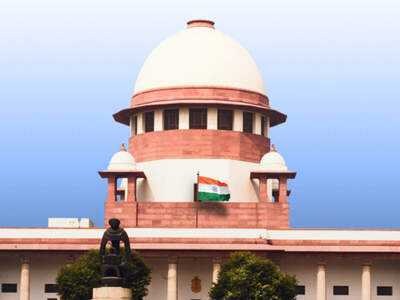
The has directed the Centre to establish a special cell to monitor the implementation of the Child Labour (Prohibition and Regulation) Amendment Act, 2016, and ensure strict enforcement of its provisions across states.
A bench of Justices SVN Bhatti and NV Anjaria asked the Ministry of Women and Child Development to issue necessary directions to enforcement agencies through the chief secretaries of respective states to ensure compliance with the amended law.
"With a view to preserving the rights of children/adolescents, we direct the second respondent to constitute a special cell, continue to monitor the implementation of the provisions of the Act and also issue direction to the enforcing agencies through the respective chief secretaries of the State, as amended through the Act No.35 of 2016," the bench said.
The court emphasised that the responsibility of the authorities was not limited to recognising the amendments but also extended to ensuring their complete and strict implementation.
"Keeping in perspective the above brief narrative, we are persuaded not to examine the prayers as made but we take note of the amendment Act No. 35 of 2016 and note that it shall be the responsibility of the respondent(s) to ensure complete and strict compliance with the mandate of the Child and Adolescent Labour (Prohibition and Regulation) Act, 1986, including the amended provisions," it said.
The directions came while hearing a petition filed in 2009 by , which had challenged the constitutional validity of a provision in the Child Labour (Prohibition and Regulation) Act, 1986.
The petition specifically contested the proviso to Section 3, which permitted children to work in certain circumstances, including beedi rolling in workshops as part of family labour and in government-aided or funded schools.
The NGO had also sought directions to the Centre to provide educational facilities and two mid-day meals to children engaged in such work. Advocates Prashant Bhushan and Pranav Sachdeva appeared for the petitioner.
During the proceedings, the Centre informed the bench that amendments to the original legislation had substantially addressed the concerns raised in the petition and that the matter no longer required consideration.
The Supreme Court agreed that the original prayers did not survive but said the implementation of the amended legislation remained an important concern.
"We are of the view that the prayer made in the writ petition does not survive for further consideration, but what remains to be taken note of is giving complete and full effect to the changes introduced by way of amendment Act No. 35 of 2016," the bench said.
The Child Labour (Prohibition and Regulation) Amendment Act, 2016, which came into force on September 1, 2016, amended the principal legislation of 1986. It introduced a blanket prohibition on employing children below 14 years in all occupations and processes, while also strengthening restrictions on adolescent employment in hazardous occupations and processes.
The Supreme Court's latest directions place the onus on the Centre and to ensure that the amended legal safeguards translate into effective action on the ground.
Contact to : xlf550402@gmail.com
Copyright © boyuanhulian 2020 - 2023. All Right Reserved.