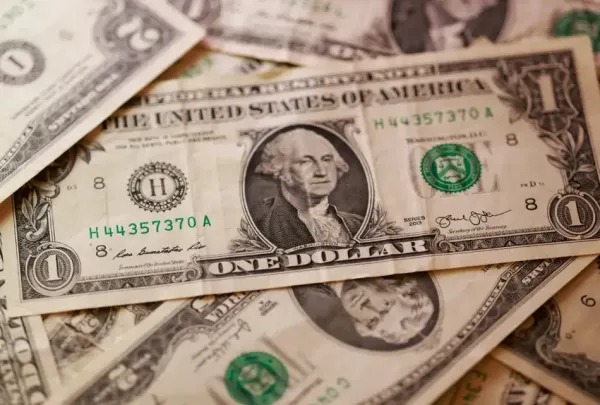
U.S. dollar banknotes are seen in this illustration taken March 24, 2026. (Reuters photo)
US Treasury yields rose on Friday, reflecting the latest shift in investor sentiment on the AI buildout that in recent months has swamped other dynamics in global markets. US dollar was on track for a modest weekly gain. The US currency has benefited from safe-haven demand amid volatile equity markets, but it is also sensitive to capital flows to the AI trade, which has made it difficult at times to parse market moves.
US Bond Treasury Yield
The 10-year Treasury yield rose 8.6 basis points to 4.93 per cent and the 2-year yield, more sensitive to expectations for Federal Reserve policy, rose 7.3 bps to 4.71 per cent. The 10-year yield is essentially flat for the month, reflecting tension between expectations that the Fed will raise rates multiple times in coming months to tamp down inflation and investor fear that the unwind of the artificial intelligence trade could tighten financial conditions enough to hit consumer spending and slow growth.
The US yield curve is now at its flattest since early last year, said Jonas Goltermann, chief markets economist at Capital Economics. While there is some debate about how much signal there actually is in this indicator, Goltermann warns that "high short-term yields relative to long-term ones reflect a judgment among market participants that tight monetary policy will weigh on economic growth – and corporate earnings – further ahead."
Dollar Index
The US dollar index, which measures the greenback against a basket of currencies including the yen and the euro, rose 0.25 per cent to 104.04, with the euro down 0.31 per cent at $1.0933. The US currency is headed for a weekly gain of 0.2 per cent.
Against the Japanese yen, the dollar strengthened 0.16 per cent to 159.51, amid concerns about another round of Japanese intervention. Australian dollar strengthened 0.18 per cent versus the greenback to $0.6644, recovering from an almost one-year low reached on Wednesday.
In cryptocurrencies, bitcoin fell 1.38 per cent to $59,922.
With US growth remaining strong and inflation still elevated, traders are pricing in continued rate hikes from the Federal Reserve, which has also supported the US currency. Fed funds futures traders are pricing in 99 per cent odds of a hike in December and a 64 per cent chance of an additional increase in January, according to the CME Group's FedWatch Tool.
Key data releases next week, including November’s jobs report, will be evaluated for further clues on likely Fed policy.