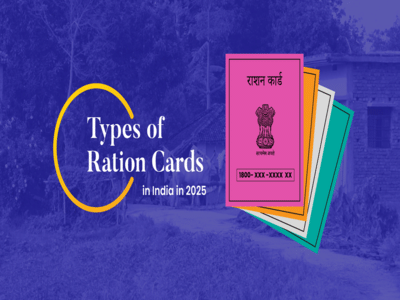
Ration cards allow ordinary people to purchase rations for free or at a reduced price. Ration cards are issued differently depending on the individual. Each color of the ration card represents a different category. Today, we will learn the meaning of these colors related to ration cards.
Under the National Food Security Act, the central government provides rations to ordinary people at a reduced price or free. To avail this benefit, a person must have a ration card. The government issues several types of ration cards, each with different benefits.
How many colors are on the ration cards?
The Indian government provides four different colors of ration cards. These cards can also be used as identification cards. The color of the ration card also indicates the benefits associated with it.
Pink or Red Ration Card
Pink or Red Ration Cards are mostly issued to families above the poverty line. Under this ration card, individuals can purchase rations at the normal price. Additionally, subsidies are also available through this ration card. This ration card can be used to avail the benefits of the Ujjwala and Housing Schemes.
Yellow Ration Card
This ration card is issued to individuals below the poverty line. Under this card, individuals can purchase wheat, rice, pulses, sugar, and kerosene at lower prices than normal. This ration card is given priority in any scheme.
White Ration Card
The white ration card is issued to those who are financially capable and do not depend on government schemes for food grains. This card is generally used for address or identification purposes. It can also be used to avail the benefits of some government schemes.
Blue or Orange Ration Card
This ration card is issued to individuals who are economically weak but do not fall under the BPL or poverty line list. These individuals also receive grains such as wheat, rice, kerosene, etc., at lower prices than normal. In some states, these ration cards also get exemptions for water and electricity.
Disclaimer: This content has been sourced and edited from Dainik Jagran. While we have made modifications for clarity and presentation, the original content belongs to its respective authors and website. We do not claim ownership of the content.