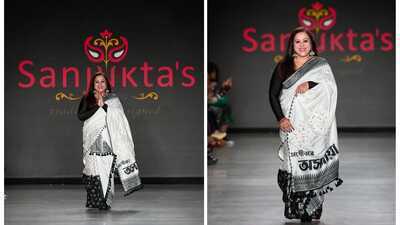
New Delhi: Assamese designer Sanjukta Dutta presented her latest collection, ‘Kuwoli The Mist’, at the Global Fashion Collective showcase during New York Fashion Week Spring/Summer, placing traditional handloom textiles from Northeast India firmly on an international runway. Known for championing indigenous silk and working closely with rural artisans, Dutta used the platform to demonstrate how regional craft can sit confidently within contemporary global fashion. Her collection explored restraint rather than excess, drawing inspiration from the quiet stillness of winter mornings in Assam.
The showcase was attended by Vishal Jayeshbhai Harsh, Deputy Consul General of India in New York, reflecting institutional support for promoting Indian textiles abroad. For Dutta, the presentation was not simply about fashion visibility; it was about strengthening the identity of Assamese silk, sustaining generational weaving practices and expanding economic opportunities for women artisans who form the backbone of her label.
Kuwoli: Monochrome minimalism with richness of Assamese silkCollection inspired by winter mist
‘Kuwoli’, meaning mist, captures the fleeting moment between darkness and daylight. Moving away from festive colour palettes, the collection embraces a black-and-white spectrum to express subtle strength and quiet confidence. The restrained tones allow texture and weave to take centre stage, reflecting the calm beauty of Northeast India’s early winter dawns.
Reimagining Assamese silkDutta reworked traditional textiles into varied silhouettes, including the classic mekhela sador, structured dresses and flowing skirts. Crafted primarily from Pat silk, a variety of mulberry silk known for its natural sheen and softness, the garments balanced geometric motifs with contemporary tailoring. The monochrome approach highlighted craftsmanship while lending a modern edge.
Displaying cultural prideAt the close of the show, Dutta appeared on the runway draped in her signature mekhela sador inscribed with the words “Proudly Assamese”. The gesture underlined her continued commitment to representing Assam’s weaving legacy on global stages and reinforcing regional identity within international fashion circuits.
Empowering women weaversCentral to Dutta’s label is a network of rural women artisans who handweave each textile. By positioning them as collaborators rather than background contributors, the designer aligns her brand with slow fashion principles, sustainability and community-led growth. The collection reflects both environmental responsibility and economic empowerment.
Indian designers at global showcaseThe event also featured Indian designers including Vikram Phadnis, Vaishali Shadangule, Rosy Ahluwalia, Bibhu Mohapatra and Nazranaa by Shivangi Gupta Singh and Shashank Gupta, each presenting collections that reflected diverse interpretations of Indian design aesthetics.
By presenting Assamese handloom within a global fashion framework, Dutta reinforced the idea that regional craft need not remain confined to local markets. Her work continues to expand the presence of Indian silk while strengthening the voices of the artisans behind it.